



Is PMP Worth It in 2026? Salary, Cost, ROI and Career Outlook
By Lazaros Kyriakidis · PMI-certified PM Trainer · GK Seminars Published: May 16, 2026 Last updated: May 20, 2026 Reading time: ~10 minutes Fact-check: based on publicly available PMI data on the exam, certification requirements and the international market picture
Quick answer
Yes, the PMP is still worth it in 2026 — especially for professionals who already have at least three years of work experience on projects and want to take the next step into project management, team coordination, consulting, operational leadership or Project Management Office roles.
It is not, however, a “magic certificate” that single-handedly raises your salary. Its value shows when it is combined with real experience, proper preparation, and active use in your CV, LinkedIn, interviews and negotiations.
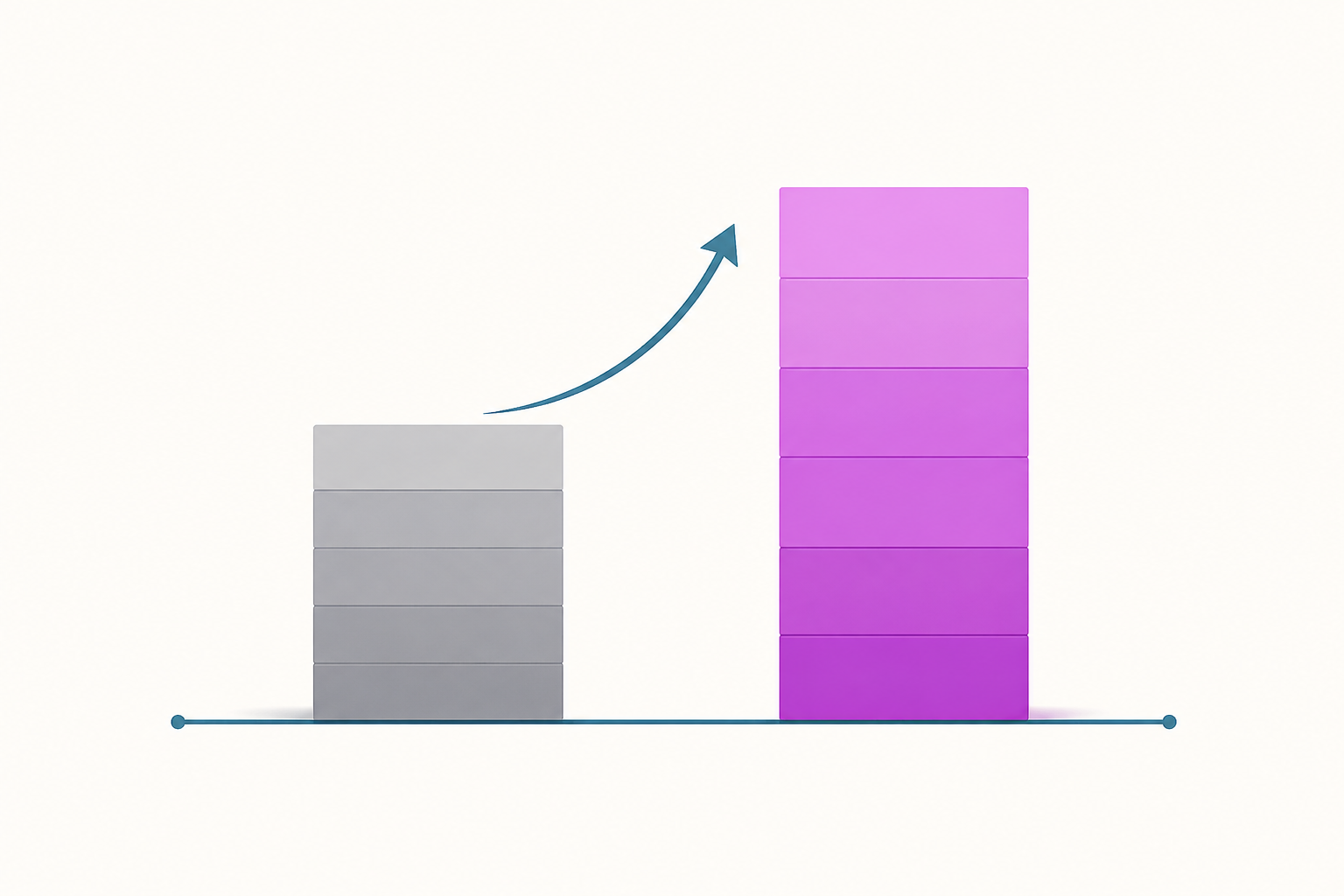
According to the latest PMI Earning Power salary survey, professionals with PMP report a 17% higher median salary on average than comparable peers without the certification, across surveyed countries.
Key takeaways
- PMP remains one of the most recognised project management certifications globally.
- PMI now reports more than 1.7 million PMP holders worldwide.
- The latest PMI Earning Power Survey shows a 17% higher median salary for PMP holders vs comparable peers.
- Total investment in Greece can start at ~€1,300.
- Indicative training cost: €700 – €2,500.
- GK Seminars: PMI Authorized Training Partner (ATP) with 99% pass rate on the PMP.
- The exam changes on 9 July 2026: it remains 180 questions, but the time becomes 240 minutes.
- PMP is not for everyone — if you’re very junior, consider CAPM instead.
The key numbers at a glance
| Item | Value | Source |
|---|---|---|
| Median salary premium for PMP | +17% | PMI Earning Power Survey |
| Global PMP holders | 1.7M+ | PMI |
| Total investment in Greece from | ~€1,300 | GK Seminars market estimate |
| Training cost | €700 – €2,500 | Greek market 2026 |
| Current exam (until 8/7/2026) | 180Q / 230 min | PMI |
| New exam (from 9/7/2026) | 180Q / 240 min | PMI |
| GK Seminars pass rate | 99% | GK Seminars cohort |
| PDUs for renewal | 60 / 3 years | PMI CCR |
What PMP is — and why we’re talking about it so intensely in 2026
The Project Management Professional (PMP) is the flagship international certification of the Project Management Institute for professionals with experience managing and leading projects.
It is not just for people who officially carry the title “Project Manager”. Many professionals act as project managers in their day-to-day without the title.
2026 is a special year because the exam changes on 9 July. PMI now places more weight on topics like business value, artificial intelligence, sustainability and connecting the project to the wider business environment.
Quick glossary
- PMP — Project Management Professional, PMI’s flagship certification.
- PMI — Project Management Institute, US-based non-profit body.
- ATP — Authorized Training Partner, officially accredited PMI training provider.
- 35 contact hours — Mandatory PM education hours to apply for PMP.
- PDU — Professional Development Unit (60 every 3 years for renewal).
- ROI — Return on Investment.
Real salaries: what we can say with confidence
The PMI Earning Power Salary Survey shows PMP holders have a higher median salary than comparable peers without the certification. The latest published figure is 17% higher median salary on average across surveyed countries.
In Greece, a conservative range for the average annual PM salary is approximately €34,000–€35,000, with junior roles lower and senior roles higher.
The most accurate phrasing isn’t “PMP guarantees an X uplift” — it’s “PMP can significantly strengthen your negotiating position, especially if you already have experience and target a more demanding, multinational, consulting or remote role”.
Why PMP can raise your market value
PMP doesn’t automatically make you a better professional — but it helps you prove you have a common language, structured thinking and understanding of how projects work across environments.
First, it gives an external, recognisable reference point. Second, at multinationals and consulting firms it acts as an evaluation filter. Third, for remote or international roles it’s more easily recognised than local seminars.
“How many doors does PMP open that were previously hard to open?” — Lazaros Kyriakidis, PMI-certified Project Management Trainer, GK Seminars
The total cost of getting PMP
| Component | Cost | Note |
|---|---|---|
| 35 hours of training (PMI ATP) | €700 – €2,500 | Mandatory |
| PMI exam fee | Paid to PMI | Varies by country/member/charges |
| PMI annual membership | Optional | Often pays off |
| Study materials | Optional | Books, mocks, platforms |
| TOTAL from | ~€1,300+ | Depends mainly on training + materials |
To apply for PMP you need 35 hours of project management education. GK Seminars is a PMI ATP — an officially recognised PMI training partner.
Why GK Seminars is a strong choice for PMP prep
GK Seminars treats PMP as end-to-end preparation from zero to certification — not just a course.
- 99% pass rate on the PMP exam
- Tens of thousands of candidates trained
- Understanding of PMI exam logic
- Practice on real exam scenarios
- Support all the way to the final attempt
- Practical connection of knowledge to the day-to-day of a PM
The ROI in a realistic scenario
| Scenario | Value |
|---|---|
| Total investment | €1,300 – €2,500 |
| Likely annual benefit | €3,000 – €6,000 |
| Payback at €3,000 annual benefit | Within the first year |
| Payback at €6,000 annual benefit | Less than 6 months |
Not a promise — a realistic scenario. The outcome depends on experience, industry, presentation, targeting, and active use of the credential.
2026 job market: is PMP actually in demand?
Yes — but not everywhere in the same way.
- Small Greek companies: don’t write “PMP required” but ask for the skills it covers.
- Multinationals, consulting, tech, pharma, energy, transformation: PMP appears frequently as required or strong preferred.
- From 2026 onwards, as PMI shifts the exam toward business outcomes, PMP’s value increases.

What changes in the PMP exam from 9 July 2026
Until 8 July 2026: 180 questions, 230 minutes, more emphasis on people/process, less on business environment.
From 9 July 2026:
- 180 questions (unchanged)
- 240 minutes (up from 230)
- Business environment carries significantly greater weight
- Emphasis on artificial intelligence, sustainability, value delivery
- More adaptive, agile and hybrid scenarios
Strategic decision: If you’re already prepared → move before the change. If you’re starting now → prepare directly against the new logic.
When PMP is NOT worth it
- If you lack the required experience (3 years with degree / more without) → start with CAPM.
- If you’re a highly specialised professional (surgeon, researcher, principal engineer) → maybe another domain certification.
- If you plan to leave PM in 1-2 years → maintenance with 60 PDUs/3 years doesn’t return.
- If you see it only as a title → it doesn’t change how you think.
How to maximise the value of PMP
- Choose a program aligned with exam logic (not memorisation).
- Sit the exam while momentum lasts.
- Update LinkedIn, CV, email signature immediately.
- Connect PMP to real outcomes (budget, scope, results).
- Use it in salary negotiation as evidence, not as a demand.
Conclusion
PMP is worth it in 2026 for the professional who already has project exposure and wants to level up.
The right question isn’t “is PMP worth it?” — it’s “do I have the experience, direction, and willingness to leverage it properly?”
Frequently asked questions
Is PMP worth it in 2026?
Yes, especially with existing experience and targeting more demanding, international, consulting or leadership roles. Not a guarantee of a salary increase on its own.
What’s the total cost of PMP in Greece?
Total investment from ~€1,300+, depending on training/exam/PMI membership/materials.
How much does PMP training cost?
€700 – €2,500 in the Greek market 2026.
How much does PMP increase salary?
17% higher median salary per PMI (depends on experience/industry/country).
Eligibility requirements?
3 years of PM experience (with degree) + 35 hours of education. More without degree.
Is ATP mandatory?
Not always, but the safest option. GK Seminars is a PMI ATP.
Why GK Seminars?
99% pass rate, tens of thousands trained, end-to-end path from zero to certification.
What changes in the exam from 9 July 2026?
240 minutes (from 230), greater weight to business environment, AI, sustainability. Stays 180 questions.
Should I sit before or after the change?
If you’re ready → before. If starting → prepare with the new logic.
About the author
Lazaros Kyriakidis PMI-certified Project Management Trainer · GK Seminars · PMI Authorized Training Partner
Trains professionals and executives in project management, PMP, CAPM and related certifications, with a focus not only on exam success but also on practical application in the real market.
LinkedIn: https://www.linkedin.com/in/lazaroskyriakidis
About GK Seminars
GK Seminars — PMI Authorized Training Partner (ATP) based in Greece. 99% PMP pass rate. Tens of thousands of trained candidates. Certifications: PMP, CAPM, PMI-ACP, DASM, DASSM, PMI-PBA. https://www.gkseminars.gr
Disclosure
GK Seminars is a PMI ATP and provides PMP training — there is a commercial relationship with the topic. Core facts are based on publicly available PMI sources. Internal GK Seminars figures (99% pass rate, number of trained candidates, ATP status) are presented as company-reported data.
Sources and verification
- PMI Earning Power Survey — https://www.pmi.org/learning/careers/earning-power-salary-survey
- PMI PMP Handbook — https://www.pmi.org/certifications/project-management-pmp
- PMI PMP Exam Content Outline (current + from 9 July 2026)
- PMI Continuing Certification Requirements (CCR) Handbook
- GK Seminars internal cohort data